Balloon Mechanics and Sequential Decision Trees in Hybrid Puzzle Platforms
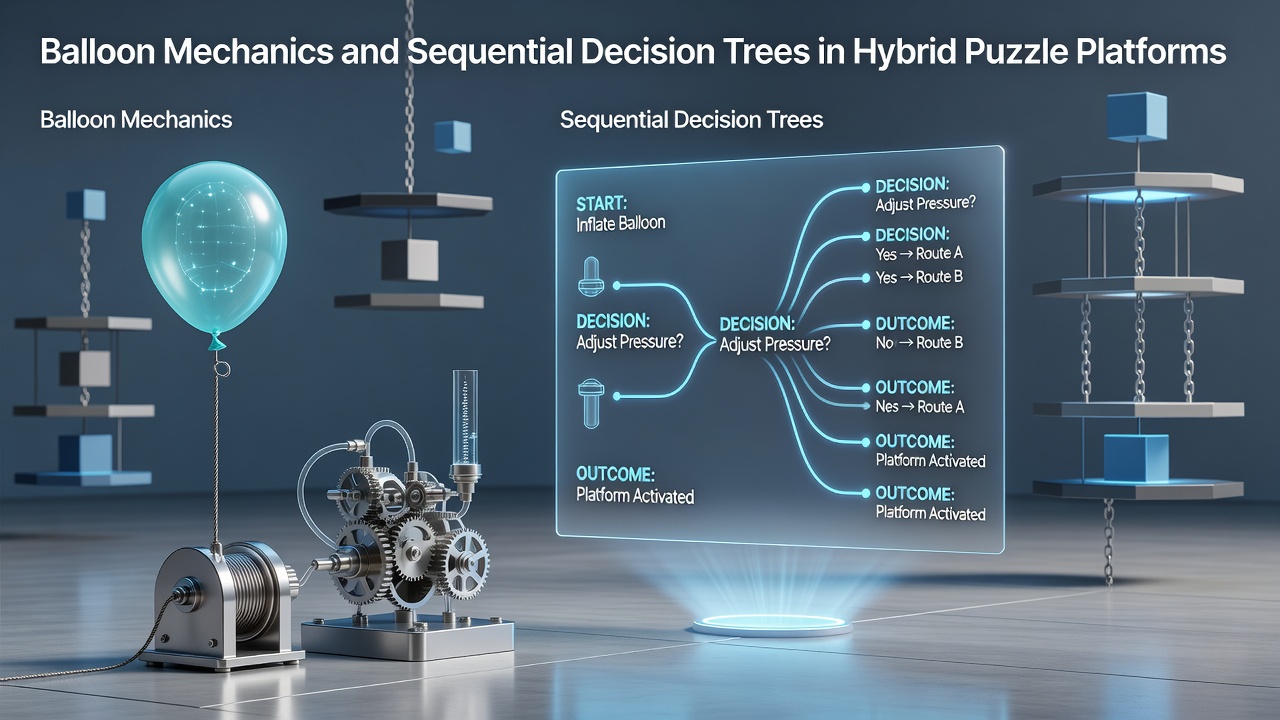 Balloon mechanics in hybrid puzzle platforms rely on principles of buoyancy and controlled inflation that alter object trajectories within constrained environments, while sequential decision trees map out layered choice sequences that players navigate to reach multiple possible endpoints. These systems appear together in various digital formats where physical simulation meets logical branching, creating layers of interaction that require both spatial awareness and forward planning. Data from industry reports shows that platforms incorporating both elements have expanded in user engagement metrics since the mid-2010s, with developers refining the interplay between floating elements and tree-based progression structures.
Core Components of Balloon Mechanics
Balloon systems operate through adjustable air volume that changes lift force and collision responses, allowing objects to rise, drift, or descend based on player inputs and environmental obstacles. In many titles the balloons attach to platforms or keys, forcing users to manage weight distribution and timing to clear gaps or activate switches. Research indicates that these mechanics draw from basic fluid dynamics models, where each inflation step recalculates vertical velocity and horizontal momentum in real time. Observers note that hybrid platforms often combine balloon movement with gravity wells or wind currents, which adds variables that decision trees must later account for when mapping successful routes.
Structure of Sequential Decision Trees
Sequential decision trees in these platforms consist of nodes that represent states and branches that encode conditional outcomes, each weighted by resource costs such as limited balloon charges or time limits. Players advance by selecting paths that satisfy cumulative constraints, with earlier choices pruning later possibilities and creating dead ends that require restarts. Studies from computational game design groups reveal that efficient tree implementations reduce computational load by pruning low-probability branches early, yet still maintain thousands of viable sequences in larger levels. Those who study these systems find that trees frequently integrate balloon state variables, such as current lift capacity, as decision criteria at key nodes.
Integration in Hybrid Environments
Hybrid puzzle platforms merge the continuous physics of balloons with the discrete logic of decision trees, producing gameplay where floating an object to a trigger point unlocks new branches while simultaneously consuming limited inflation resources. This fusion means that a single miscalculation in balloon trajectory can eliminate entire sub-trees of options, compelling players to restart from earlier checkpoints. Figures from gaming analytics platforms show that levels built on this integration maintain average completion times between eight and twelve minutes when balanced correctly, with failure rates dropping after players internalize the relationship between lift values and branch viability. What's interesting is how certain titles embed hidden tree nodes that only become accessible once balloon mechanics are used to reach otherwise unreachable platforms.
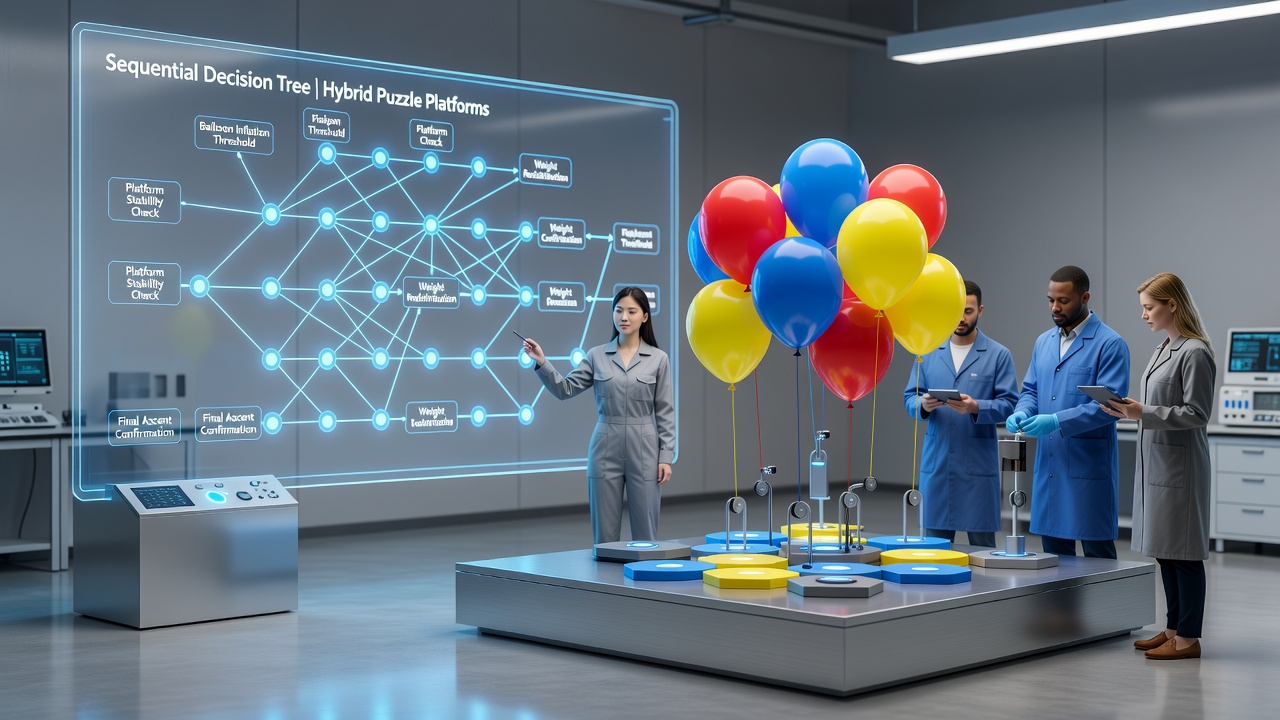
Developers have documented cases where balloon inflation serves as both a movement tool and a state modifier within the decision tree, altering which branches remain open based on how much lift remains. In one documented implementation the remaining air volume directly influences probability weights assigned to success paths, so players who conserve resources gain access to shorter routes while those who expend air early must navigate longer sequences. Academic papers on interactive entertainment systems note that this dual role encourages iterative testing, because each balloon decision retroactively reshapes the effective size of the decision tree presented to the user.
Technical Implementation Patterns
Engineers typically represent balloon states through floating-point variables that update every frame, feeding these values into decision tree evaluators at discrete trigger points rather than continuously. This hybrid update cycle prevents excessive branching calculations during smooth movement phases while still capturing critical state changes when balloons interact with level geometry. Industry organizations such as the International Game Developers Association have highlighted case studies where optimized tree pruning based on balloon resource thresholds improved frame rates by up to thirty percent on mobile devices. Data from European research consortia further indicates that similar optimizations appear in browser-based hybrids, where network latency makes frequent full-tree evaluations impractical.
Player Interaction Dynamics
Players interact with these combined systems by issuing inputs that simultaneously affect balloon trajectory and commit to specific decision branches, creating moments where a single action resolves both physical positioning and logical progression. Observers have recorded that successful navigation often requires holding an intermediate balloon state across multiple nodes, which demands precise timing and memory of prior choices. Reports from university game labs in Canada demonstrate that players who treat balloon management as an extension of the decision process rather than a separate physics layer complete sequences with fewer restarts. Those patterns emerge consistently across titles released between 2022 and 2025, suggesting the integration has become a recognizable design convention.
Conclusion
Balloon mechanics and sequential decision trees continue to intersect in hybrid puzzle platforms through shared state variables and resource constraints that shape both movement and choice outcomes. Technical implementations balance continuous physics updates with discrete tree evaluations, while player data reveals measurable improvements in completion efficiency when the two systems are tightly coupled. As platforms evolve, the documented patterns of integration provide concrete reference points for future designs that rely on buoyancy-driven positioning alongside branching logical sequences.