How Thinking Strategies Transfer Between Number Placement Puzzles and Matching Tile Games in Digital Formats
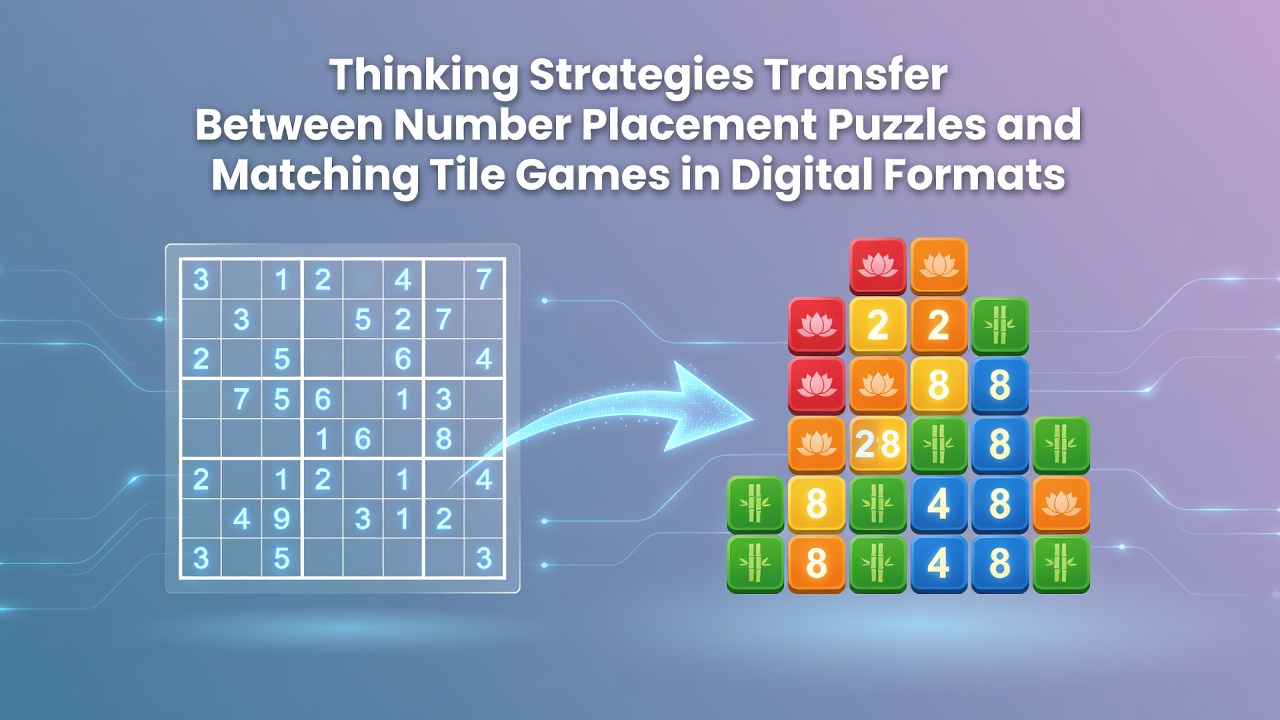
Number placement puzzles such as Sudoku require players to fill grids according to specific rules while matching tile games like Mahjong solitaire demand identification of identical pairs across layered boards, and observers note that both formats appear in digital apps with increasing frequency as of June 2026 when global mobile gaming data shows sustained user engagement across platforms. Researchers at institutions like the University of Toronto have documented that pattern recognition serves as a core process in each type because solvers scan for sequences in numbers and visual matches in tiles simultaneously, which creates a foundation for strategy overlap that persists when individuals switch between the two formats on screens.
Core Cognitive Processes in Number Placement Puzzles
Players engage deductive reasoning when eliminating possibilities from rows and columns in digital Sudoku interfaces, while spatial memory helps track filled cells across larger grids that expand in mobile versions; studies from the National Institutes of Health indicate these activities strengthen working memory circuits because repeated exposure to constraint satisfaction tasks builds efficiency in holding multiple variables active at once. Data from cognitive assessments reveal that individuals who complete daily number placement challenges often demonstrate faster resolution times on subsequent sessions due to internalized elimination techniques that reduce trial and error over repeated plays.
Mechanisms in Matching Tile Games
Matching tile formats emphasize visual scanning and rapid decision making as users identify pairs before timers expire or boards shift in digital adaptations, and experts from the European Brain Council have observed that these games recruit attention networks because layered arrangements force constant reevaluation of hidden elements beneath visible ones. Research indicates that successful players develop chunking strategies where they group similar tiles mentally to accelerate selections, which mirrors the grouping tactics employed during number placement when solvers cluster related digits to resolve sections more efficiently.
Strategy Overlaps and Transfer Effects
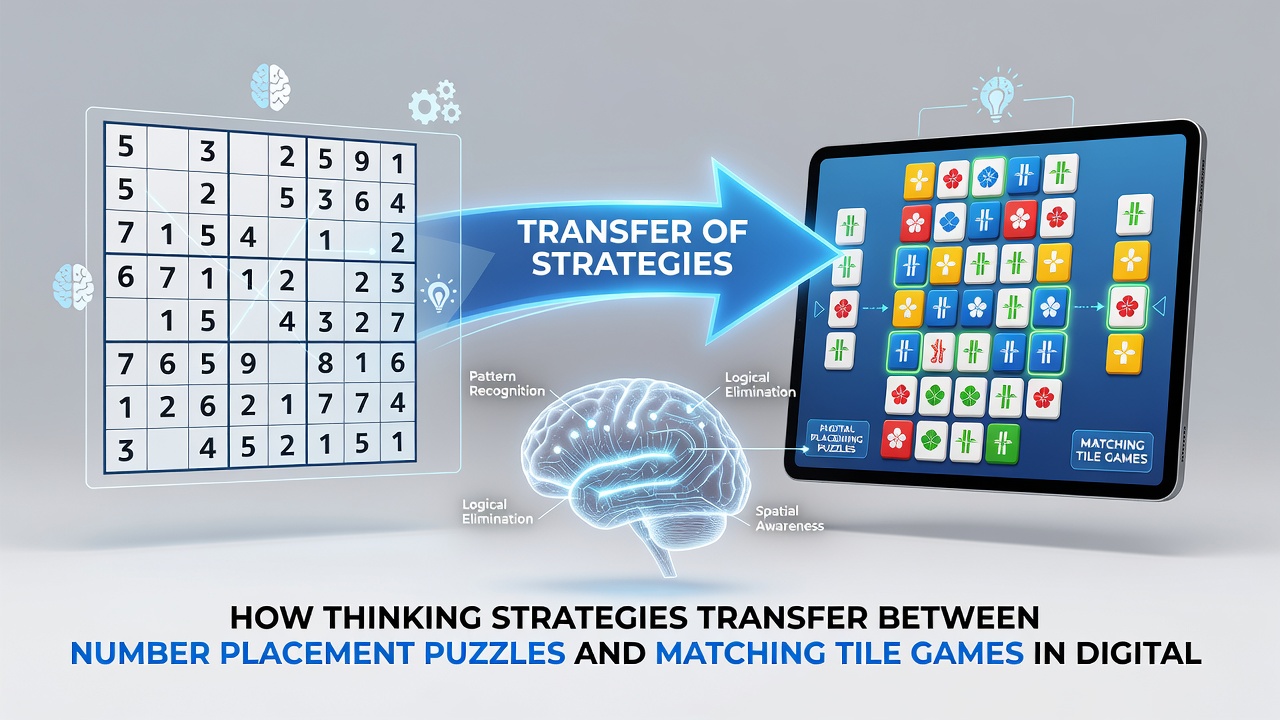
Both puzzle categories rely on logical sequencing and foresight because number placement solvers anticipate conflicts several moves ahead while tile matchers plan sequences to clear obstructions without disrupting future pairs, and this shared demand for predictive modeling allows skills to migrate when users alternate between apps on the same device. Observers note that an individual proficient in digital Sudoku often applies elimination logic to clear blocked tiles faster in matching games since both require systematic reduction of options rather than random attempts, which produces measurable improvements in completion rates according to tracking data collected from popular puzzle platforms.
Working memory transfer occurs readily because each format taxes the temporary storage of information, whether that involves remembering number candidates in a grid or recalling positions of previously viewed tiles after they disappear from view, and longitudinal observations show participants who practice one type exhibit enhanced performance in the other within controlled digital sessions. Pattern detection skills honed through repeated number placements enable quicker identification of matching configurations in tile games since both hinge on detecting regularities amid apparent disorder, which researchers confirm through pre and post training evaluations that track accuracy gains across task types.
Digital Format Influences on Transfer
Touchscreen interfaces and adaptive difficulty settings in modern apps facilitate strategy transfer because they allow seamless switching between puzzle modes without physical reconfiguration, and industry reports from the Interactive Software Federation of Europe highlight how in app progressions encourage cross genre practice that reinforces shared cognitive pathways. Adaptive algorithms adjust challenge levels based on prior performance in number placement modules, which indirectly benefits tile matching accuracy since users carry forward refined scanning habits into new sessions, yet platform analytics reveal that transfer diminishes when session lengths exceed typical attention spans without breaks.
Multiplayer digital variants introduce social elements that further modulate strategy sharing because competitors exchange tips on forums or leaderboards, which spreads techniques like systematic scanning from number based puzzles into tile matching communities, and data collected across regional servers shows increased cross genre proficiency among frequent participants who engage with both formats regularly.
Evidence from Controlled Studies
Controlled experiments conducted at Australian universities demonstrate that participants trained exclusively on number placement tasks improve their tile matching speeds by measurable margins when tested afterward, which supports the notion that deductive frameworks generalize beyond their original domain, and similar findings emerge from Canadian research groups examining digital game based cognitive interventions. These results hold across age groups because older adults who maintain consistent digital puzzle routines retain transfer benefits longer than those who focus on single genres alone, according to aggregated performance metrics tracked over months.
Conclusion
Strategy transfer between number placement puzzles and matching tile games in digital formats rests on overlapping demands for pattern recognition, deductive elimination, and working memory management, which research consistently identifies as portable skills that strengthen through repeated exposure across both categories. Digital platforms accelerate this process by providing accessible environments where users apply techniques interchangeably, and ongoing data collection through June 2026 continues to map how these cognitive connections evolve with advancing app designs and user habits.