Intersections of Risk Evaluation and Precision Timing Across Balloon Mechanics and Classic Card Matching Experiences in Browser Environments
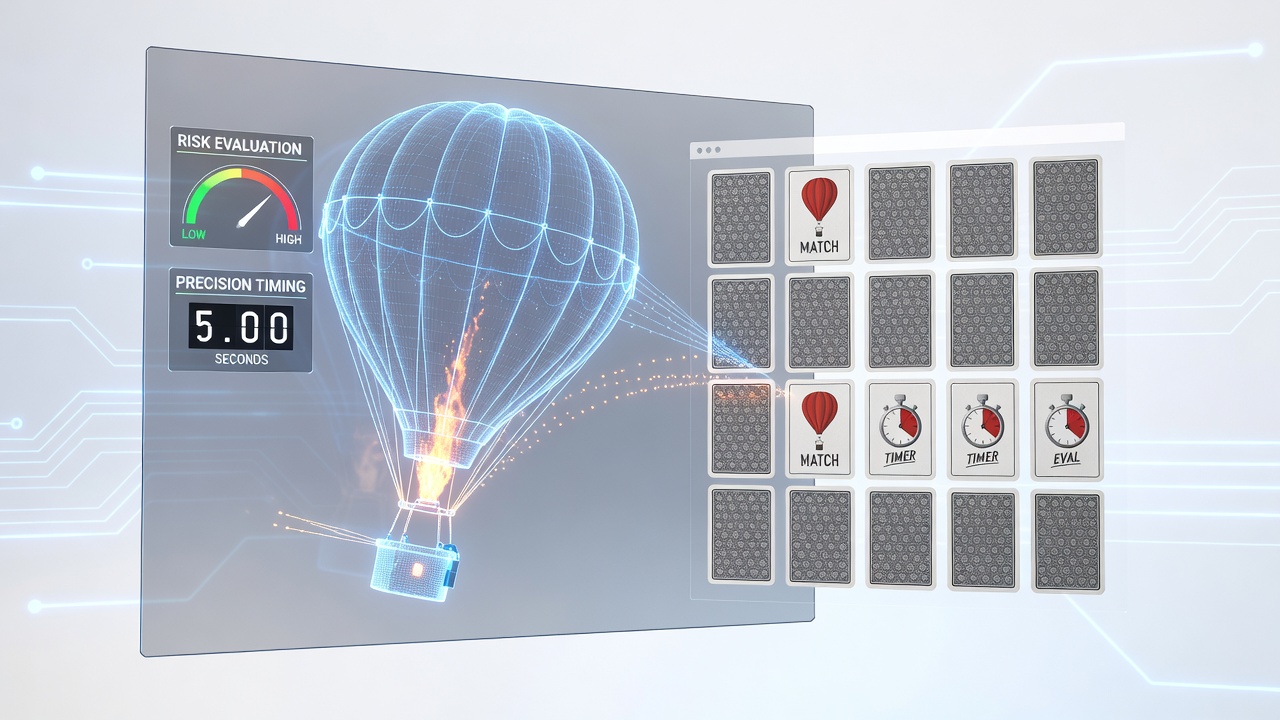
Browser environments host a range of games where risk evaluation combines with precision timing to shape player decisions, and balloon mechanics intersect directly with card matching structures through shared demands on sequence management and resource control. Balloon games require continuous assessment of expansion thresholds while card matching layouts demand selections that account for hidden states and potential chain reactions, creating parallel frameworks for evaluating when to act and how much margin to leave for error.
Core Mechanics in Balloon-Based Sequences
Balloon systems in browser platforms operate through incremental pressure models where each input increases volume until a defined limit triggers collapse, forcing players to monitor cumulative values against probabilistic failure points. Data from interactive entertainment reports indicate that successful navigation depends on tracking incremental changes in real time, with timing windows often narrowing as sequences extend beyond initial stages. Researchers note that these models mirror resource allocation problems found in other digital formats, where overcommitment leads to immediate termination while conservative pacing reduces overall yield.
Card Matching Structures and Decision Windows
Classic card matching experiences present grids or stacks that reveal partial information, requiring players to align suits or values under constraints of limited moves and reshuffle options. Precision enters through the selection of which pairs to resolve first, since early choices alter the remaining configuration and narrow subsequent opportunities. Observers have documented how these layouts reward anticipation of future states, with timing of reveals and matches determining whether cascades form or stalls occur in extended sessions.
Overlapping Risk Frameworks
Risk evaluation surfaces in both systems through the need to weigh immediate gains against potential losses that compound over multiple steps. In balloon sequences, this appears as calibration of inflation rates to avoid burst points while maximizing score multipliers, whereas card matching requires assessment of whether exposing a particular pair justifies disrupting an established order. Studies on pattern recognition in digital puzzles reveal that participants who integrate timing data with risk thresholds maintain longer sessions across both game types, suggesting transferable calibration strategies.
Browser delivery adds layers through variable latency and interface responsiveness, where input delays can shift the effective window for safe actions. Figures from gaming industry analyses show increased engagement with hybrid formats that blend these elements, particularly during periods when developers release updates aligning physics models with combinatorial logic. In July 2026 several platforms introduced synchronized timing overlays that display shared risk meters across balloon and matching modules, allowing direct comparison of decision impacts within single sessions.
Timing Precision Across Formats
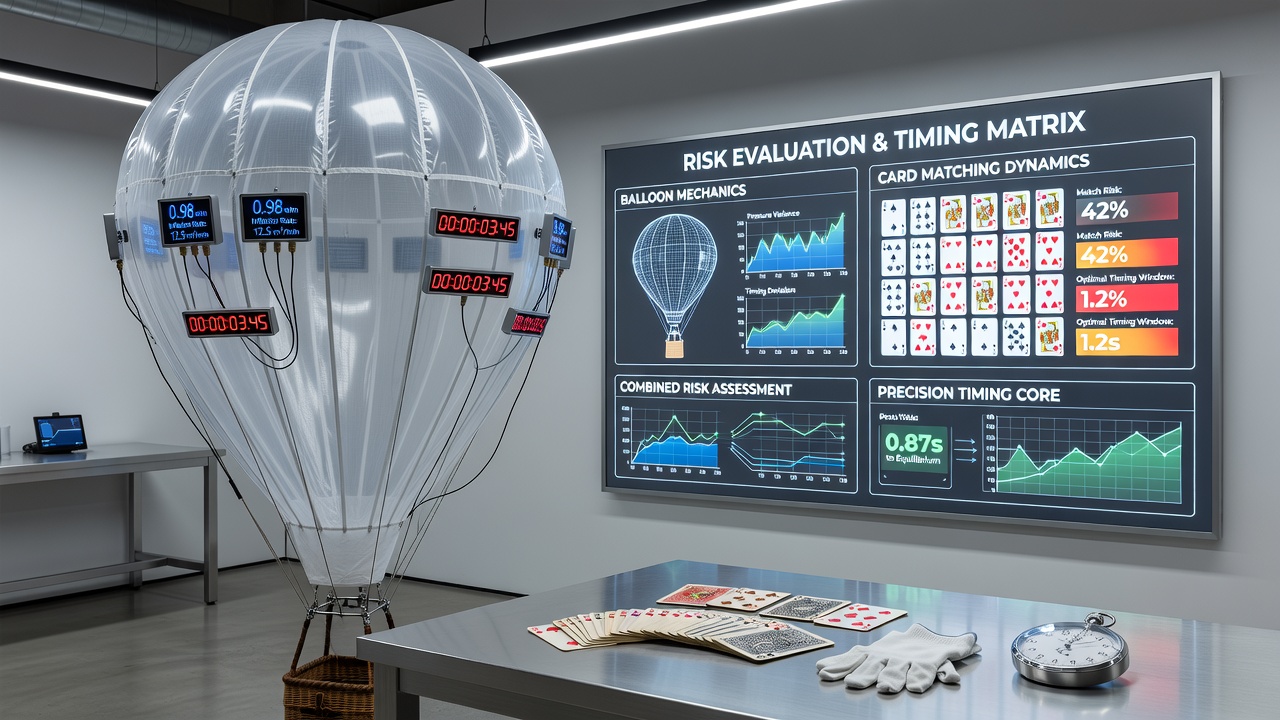
Precision timing manifests as the ability to execute actions within shrinking intervals that depend on prior choices, creating feedback loops where early accuracy enables later flexibility. Balloon mechanics enforce continuous monitoring because pressure builds steadily, while card matching introduces discrete checkpoints where misaligned selections close off branches. Those who've examined cross-genre play patterns report that individuals proficient in one domain often adapt quickly to the other when interfaces maintain consistent visual cues for remaining margins.
External factors such as frame rates and input buffering further influence these intersections, since browser rendering can compress or expand perceived timing windows. Industry reports from the Statistics Canada digital economy surveys document rising participation in browser-based puzzle hybrids, with timing-sensitive titles showing higher retention rates when risk indicators appear consistently across mechanics. Similar patterns appear in analyses from the Interactive Games Association of Australia, where data on user behavior highlight correlations between calibrated risk thresholds and session duration in combined balloon and matching environments.
Browser-Specific Implementation Patterns
Web-based platforms standardize certain elements through JavaScript timing functions and canvas rendering, which developers use to synchronize pressure accumulation in balloons with reveal sequences in card grids. This technical foundation supports experiments in unified risk displays, where visual meters track both expansion limits and matching opportunities simultaneously. Evidence from user interaction logs suggests that such integrations reduce cognitive switching costs, allowing players to apply evaluation routines developed in one mechanic to the demands of the other without extended adaptation periods.
Conclusion
The intersections between balloon mechanics and card matching in browser settings center on shared requirements for assessing cumulative risks while executing actions inside precise temporal boundaries. Research indicates these overlaps support skill transfer when platforms maintain consistent feedback systems, and ongoing updates in 2026 continue to refine how these elements combine within single interfaces. Observers tracking digital entertainment trends note sustained interest in formats that emphasize these dual competencies, driven by measurable engagement metrics across regions.