Investigating Visual-Spatial Reasoning in Tile-Matching Experiences Across Mahjong and Solitaire Formats on Digital Browsers
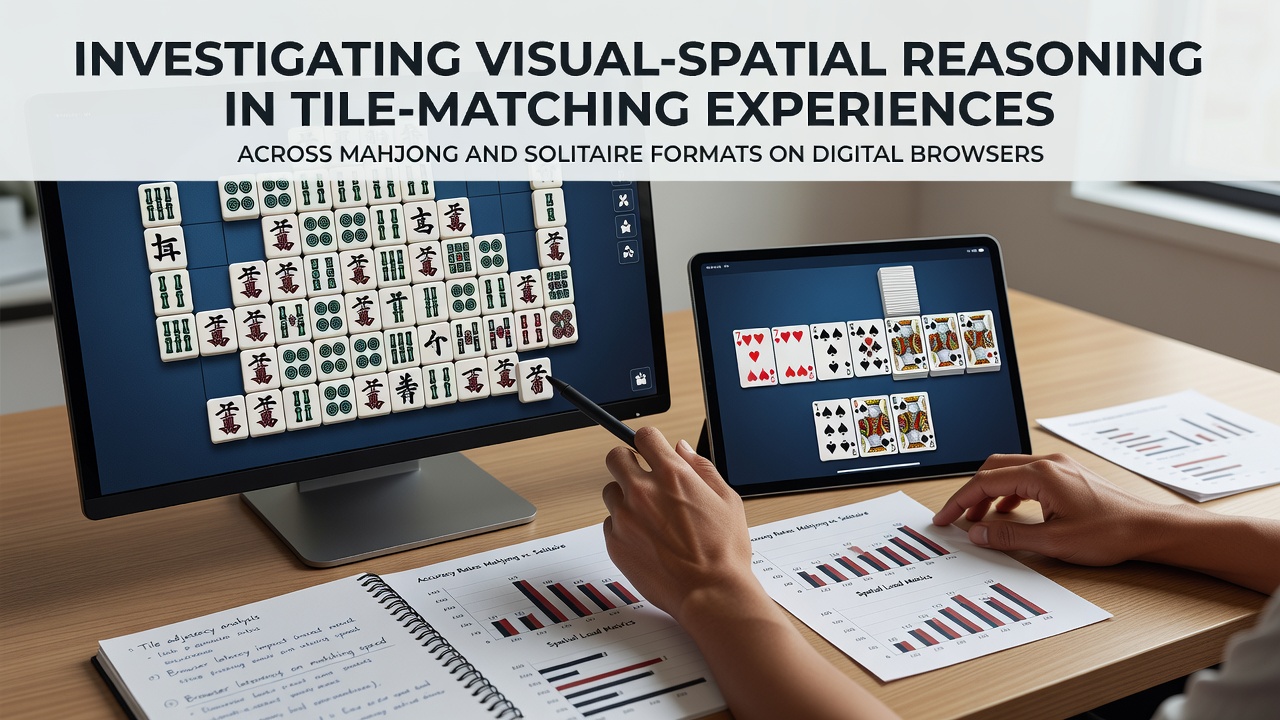
Digital browsers host numerous tile-matching formats that draw on visual-spatial reasoning, a cognitive process involving the mental manipulation of objects and recognition of spatial relationships, and Mahjong along with solitaire variants provide clear platforms for examining these skills in action. Players navigate arrangements where tile positions, orientations, and groupings influence decision sequences while interfaces adapt across desktop and mobile browsers.
Research indicates that visual-spatial tasks activate regions in the parietal lobe, and studies from institutions like the National Institutes of Health document how repeated exposure to matching mechanics strengthens abilities to rotate mental images and track multiple elements simultaneously. In browser environments these processes occur without physical components, which allows researchers to log interaction data such as click patterns and response times across large participant groups.
Core Elements of Visual-Spatial Reasoning in Tile Games
Tile-matching experiences require users to perceive depth, alignment, and occlusion, particularly when tiles stack in three-dimensional representations or spread across two-dimensional grids. Mahjong arrangements often feature overlapping layers that demand mental reconstruction of hidden positions, whereas solitaire layouts emphasize sequential ordering and suit matching within visible rows. Data collected through web analytics platforms show that session durations increase when spatial complexity rises, suggesting sustained engagement with these cognitive demands.
Observers note that browser-based versions standardize tile sizes and colors, which reduces variability found in physical sets and enables consistent measurement across experiments. A 2025 report from the Canadian Institute of Health Research highlighted how digital tracking reveals individual differences in rotation speed and grouping strategies during play sessions that last between ten and thirty minutes.
Mahjong Implementations on Browsers
Mahjong formats in browser settings typically present four-layer structures where players remove matching pairs from exposed positions, and the removal sequence alters the spatial configuration for subsequent moves. Developers implement ray-casting techniques to simulate perspective, which forces players to account for line-of-sight constraints when selecting tiles. Usage statistics from European gaming portals indicate that Mahjong sessions average 18 percent longer than other puzzle categories, correlating with higher demands on mental rotation.
Those who have examined interaction logs find that successful players frequently scan entire boards before committing to a move, a behavior tied to spatial updating skills measured in laboratory tasks. In June 2026 the Cognitive Science Society will host a symposium presenting longitudinal data gathered from browser users across multiple continents, focusing on how repeated Mahjong exposure transfers to non-game spatial assessments.
Solitaire Formats and Their Spatial Requirements
Solitaire adaptations on browsers range from classic Klondike cascades to free-cell variants, each presenting distinct spatial organizations that require tracking card positions relative to foundations and waste piles. Players must anticipate how moving one card opens or blocks access to others, which engages both visual search and working memory components of spatial reasoning. Australian research teams at the University of Melbourne have recorded eye-movement data showing increased fixations on tableau edges during complex cascades, patterns that align with established measures of spatial attention.
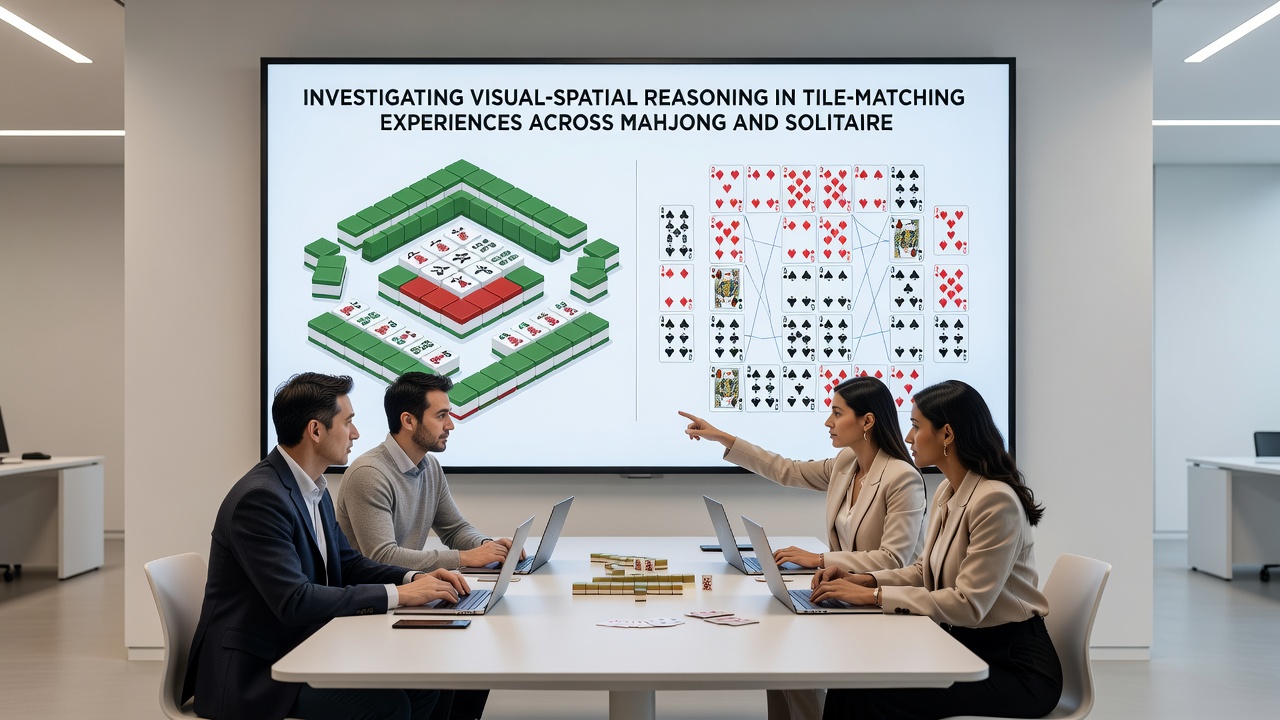
Browser implementations often include undo functions and hint systems that influence strategy selection, yet core spatial processing remains necessary for efficient play. Figures from industry reports reveal that solitaire titles maintain steady monthly active user counts exceeding several million, with peak access occurring during midday hours when short sessions fit between other activities.
Comparative Patterns Across Both Formats
Direct comparisons between Mahjong and solitaire in controlled browser studies reveal overlapping yet differentiated spatial demands, with Mahjong emphasizing three-dimensional occlusion handling and solitaire stressing linear sequencing and suit categorization. Participants who alternate between formats demonstrate transfer effects on standardized spatial tests, according to preliminary datasets shared at academic conferences. Researchers have observed that completion times decrease after five sessions regardless of starting format, pointing to generalizable improvements in visual scanning efficiency.
Platform differences also surface when examining touch versus mouse input, since mobile browsers introduce gesture-based rotation absent in desktop versions, which alters the motor component of spatial interaction while preserving the underlying visual processing load. Trade groups such as the Interactive Software Federation of Europe compile anonymized telemetry that supports these observations across regional user bases.
Conclusion
Browser-based tile-matching experiences in Mahjong and solitaire formats offer measurable windows into visual-spatial reasoning processes, and ongoing data collection continues to map performance indicators across diverse player populations. Scheduled presentations in June 2026 will expand the available evidence base, providing additional benchmarks for how digital interfaces shape cognitive engagement with these longstanding game structures.