Player Decision Sequences in Web-Based Elimination Formats Merging Numerical Grids with Object Removal
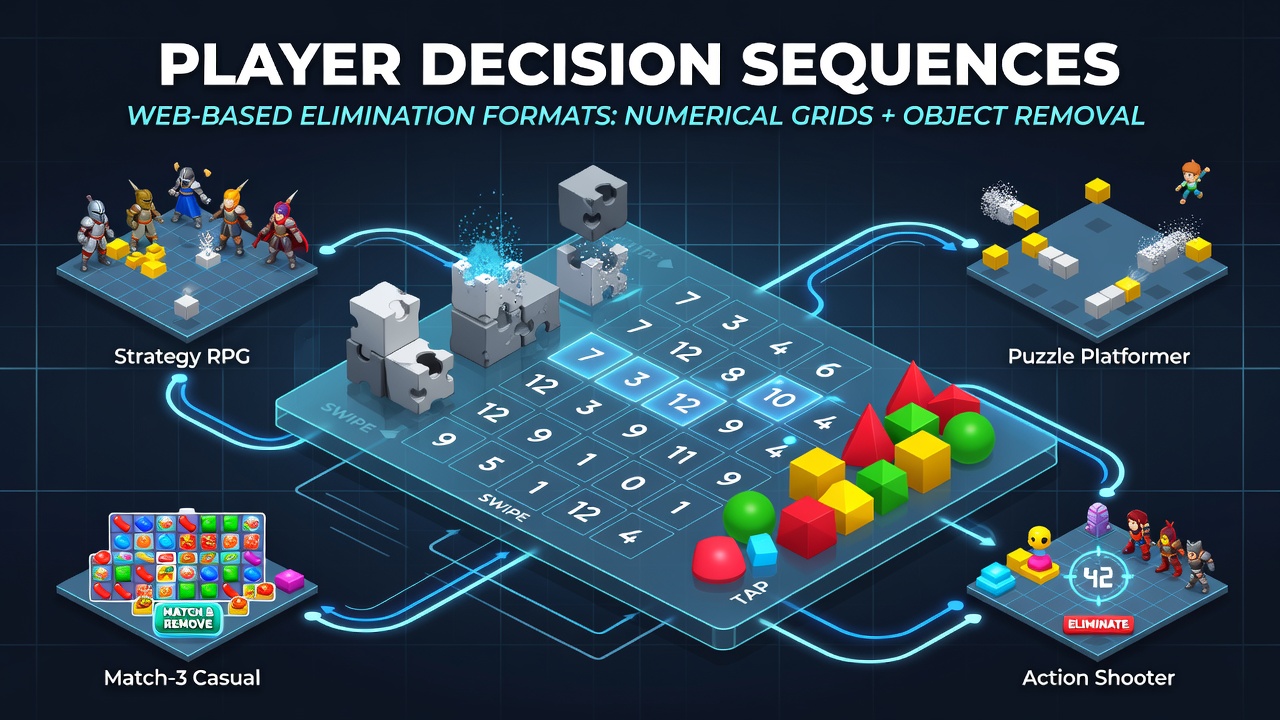
Web-based elimination formats that integrate numerical grids with object removal mechanics operate across puzzle, strategy, and casual gaming genres where players navigate layered choices that influence both number placement rules and sequential object clearances. These systems require sequences of decisions that account for immediate removals while preserving long-term grid completion paths, and data from browser platforms show consistent patterns in how users prioritize moves that satisfy multiple constraints at once.
Core Mechanics in Hybrid Grid and Removal Systems
Players encounter grids populated with numbers alongside floating or clustered objects that respond to removal triggers based on value matches, color alignments, or positional rules, and each selection alters available options in subsequent turns. Decision sequences emerge when a move that clears objects also opens numerical cells for placement, creating branching paths that reward foresight over reactive play. Observers note that successful navigation depends on recognizing how early eliminations reduce later constraints, whereas isolated moves that ignore grid interdependencies often lead to dead ends.
Studies indicate these mechanics appear in titles that blend Sudoku-style cell filling with match-based popping or chain reactions, and platform analytics reveal users spend extended time evaluating trade-offs between clearing high-value objects and maintaining numerical sequences. In July 2026, reports from the Entertainment Software Association highlighted increased engagement metrics for such hybrid formats on desktop and mobile browsers, with session lengths extending when decision complexity rises through combined rulesets.
Sequential Choice Patterns Across Genres
Strategy-oriented versions emphasize planning multiple steps ahead because object removals can cascade into new numerical opportunities or blockages, while casual implementations streamline choices to focus on immediate clearances that still advance grid progress. Researchers have documented that players in puzzle hybrids frequently alternate between scanning the grid for number fits and assessing object clusters for removal potential, resulting in decision trees that branch based on whether a single action satisfies both elements. Those who study these patterns find that experienced users develop heuristics for weighting object value against numerical urgency, allowing faster resolution of overlapping requirements.
Case examples include browser experiences where numerical constraints dictate which objects become removable next, and timing elements add pressure that compresses the decision window. Data shows players adapt by pre-evaluating clusters before committing, which reduces failed sequences and improves completion rates across repeated sessions. What's interesting is how these adaptations transfer when genres shift from pure elimination to mixed collection formats that retain grid structures.

Cross-Genre Applications and Platform Data
Adaptations appear in matching games that incorporate numerical progression alongside removal chains, and in card-inspired layouts that use suit alignments to trigger object clearances within grid frameworks. According to findings from the University of Melbourne's digital entertainment research group, users demonstrate measurable improvements in pattern recognition speed when moving between these variants because the underlying decision sequences share common evaluation steps. Platform logs indicate that July 2026 saw elevated participation in events featuring these hybrids, with completion statistics rising when tutorials emphasized sequence planning over isolated actions.
Industry tracking from Canadian digital media authorities further notes that browser-based systems benefit from responsive interfaces that highlight potential outcomes of combined moves, enabling players to simulate short decision chains before execution. This support reduces cognitive load while preserving the challenge of balancing numerical rules with removal priorities across genres that range from abstract puzzles to themed collection experiences.
Conclusion
Player decision sequences in these merged formats reflect structured evaluation processes that integrate numerical grid logic with object removal outcomes, and ongoing platform data continues to document how users refine these sequences through repeated exposure. Cross-genre consistency in choice patterns supports broader application in web entertainment systems where multiple rule layers coexist.