Seasonal Event Integrations Boosting Participation in Online Versions of Mahjong, Sudoku, and Solitaire
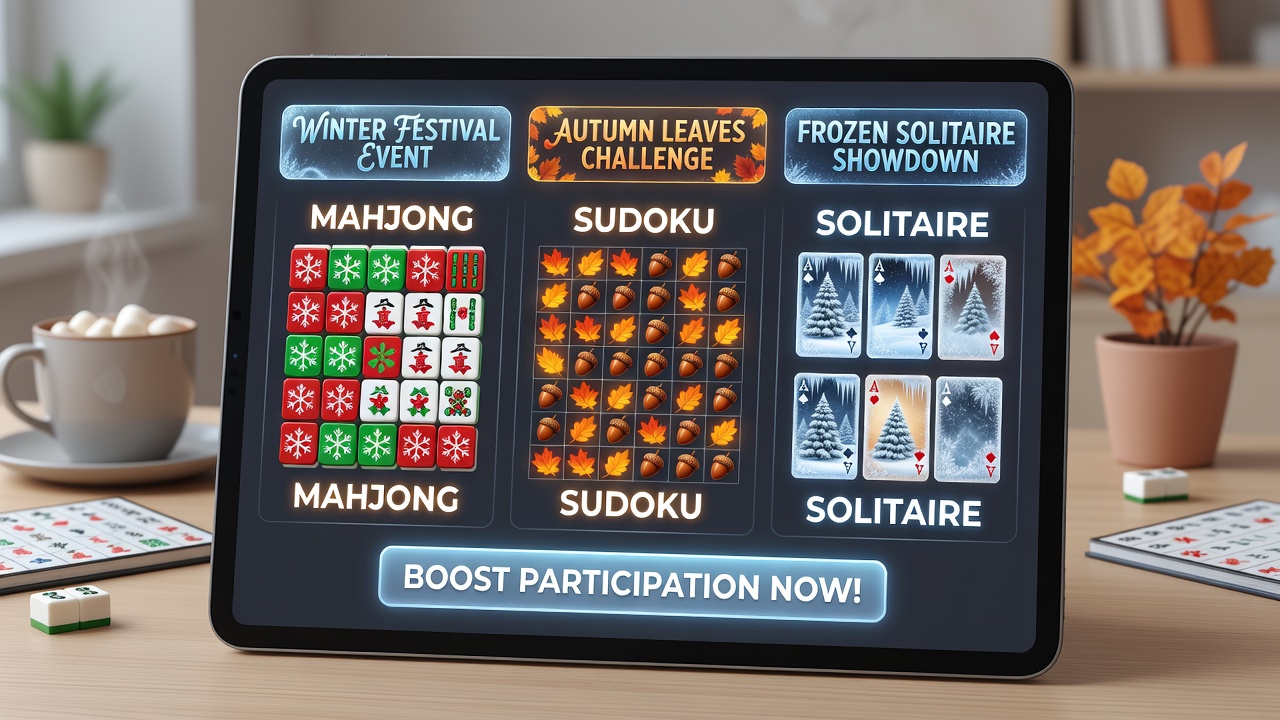
Platforms offering digital versions of mahjong, sudoku, and solitaire have incorporated seasonal events that align game mechanics with holidays and calendar milestones, and data from multiple tracking services show measurable increases in daily active users during these periods. Events typically introduce limited-time themes, such as winter snow overlays for mahjong tiles or harvest motifs for solitaire card backs, while preserving core rules that players already know. Researchers tracking browser-based entertainment note that these additions create recurring engagement cycles without requiring users to learn new systems from scratch.
Patterns Across Major Puzzle Categories
Online mahjong sites have run dragon boat festival modes in early summer where tile sets feature regional artwork, and participation metrics rise as users complete daily challenges tied to the event calendar. Sudoku applications add grid variants with patriotic color schemes around national holidays, while solitaire platforms release seasonal deck designs that carry forward progress from previous events. Observers note that these integrations often bundle small rewards like profile badges or temporary multipliers, which encourage return visits across consecutive days. Data collected through platform analytics indicate that event windows produce higher session lengths compared to standard periods, particularly when themes rotate on predictable schedules.
Participation Trends in Mid-2026
During July 2026 several major portals launched summer festival events that combined elements from all three games under unified progress bars, allowing players to advance through mahjong layouts, sudoku grids, and solitaire runs while earning shared currency. Figures from industry monitoring groups reveal that concurrent user counts climbed steadily through the month, with peak activity occurring on weekends when special limited challenges appeared. Those tracking browser traffic patterns report that cross-promotion between the three titles helped retain users who might otherwise switch to other entertainment options during warmer months.
Integration techniques vary by region yet follow similar structures. North American services often tie events to civic holidays with flag-themed backgrounds, whereas European platforms emphasize local harvest or music festivals. Australian and Asian operators have experimented with winter-in-July promotions for southern hemisphere audiences, creating parallel participation spikes. Academic studies examining digital puzzle engagement show that these geographically tailored approaches reduce drop-off rates among users who travel or live in different time zones.
Mechanics That Sustain Interest
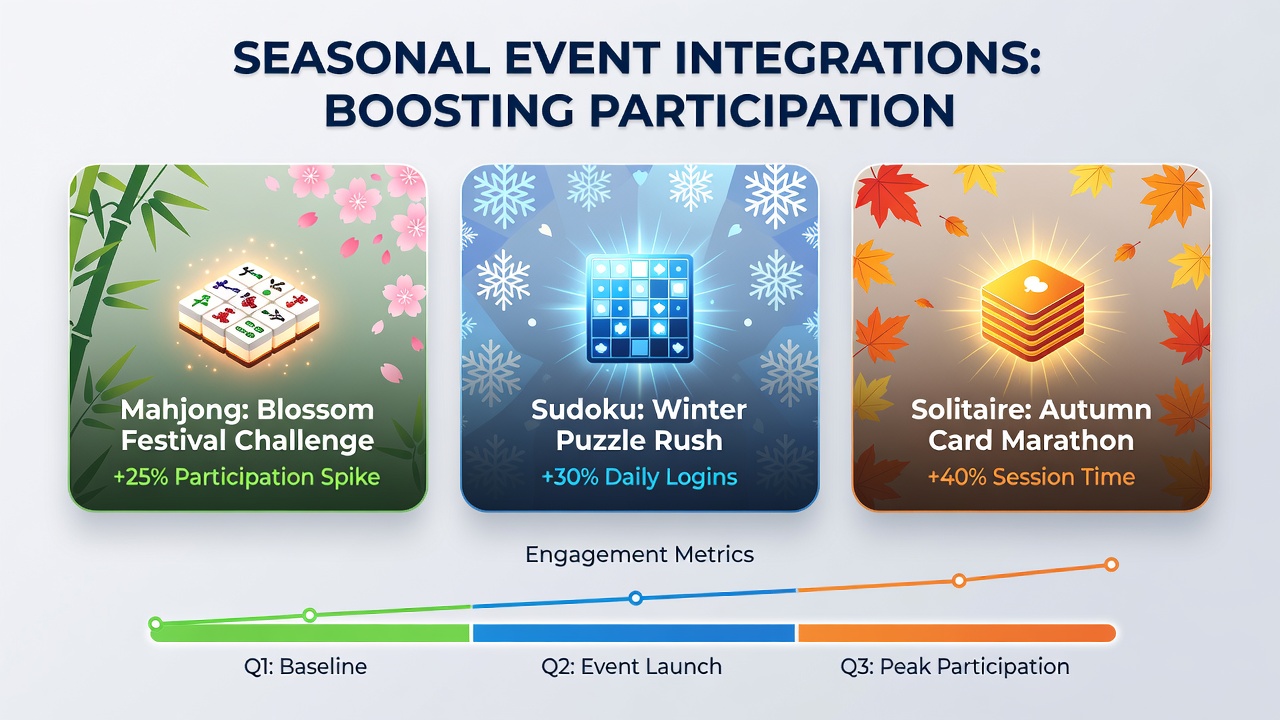
Event designers keep core gameplay intact while layering visual and progression systems on top. Mahjong players still match identical tiles, yet seasonal modes add animated effects when pairs disappear during specific date ranges. Sudoku grids retain standard number placement but incorporate floating icons that appear after correct entries during festival weeks. Solitaire variants maintain traditional foundation building while offering alternate card faces that unlock only for the duration of the event. These surface-level changes prove sufficient to refresh interest without altering the logical structure that long-term users expect.
Platform operators report that event calendars published in advance allow communities to coordinate group challenges, and leaderboards reset at the start of each new theme to give fresh participants equal footing. According to data published by the Entertainment Software Association, puzzle and casual game segments experience consistent quarterly lifts when limited-time content aligns with real-world observances. A separate analysis released by the European Games Developer Federation examined browser-based titles across multiple languages and found parallel increases in average playtime during coordinated seasonal campaigns.
Cross-Game Event Structures
Unified events that span mahjong, sudoku, and solitaire have become more common because they let users move between familiar formats while maintaining a single reward track. One observed pattern involves daily login streaks that award points redeemable in any of the three games, creating natural migration between titles. Another approach introduces shared story elements presented through short narrative panels that advance only after players complete tasks in different puzzle types. These hybrid frameworks appear to support broader retention because participants discover new preferences while still returning to their original favorite.
Technical implementation remains straightforward on most browser platforms because the underlying engines already support asset swaps and timer-based triggers. Developers schedule new visual packs months ahead, and automated systems activate them on predetermined dates without requiring manual intervention. Maintenance logs from several services indicate that server loads during peak event days stay manageable because seasonal traffic distributes across existing infrastructure rather than demanding new capacity.
Conclusion
Seasonal integrations in online mahjong, sudoku, and solitaire continue to demonstrate clear correlations with elevated participation metrics across multiple platforms and regions. Structured events that respect original rules while adding timely visual and reward layers produce repeatable engagement patterns that align with calendar cycles. Continued refinement of cross-title progress systems and geographically sensitive theming suggests these approaches will remain a standard feature in digital puzzle entertainment.