The Application of Machine Learning for Personalized Puzzle Generation in Online Skill-Based Entertainment Featuring Sudoku and Solitaire Elements
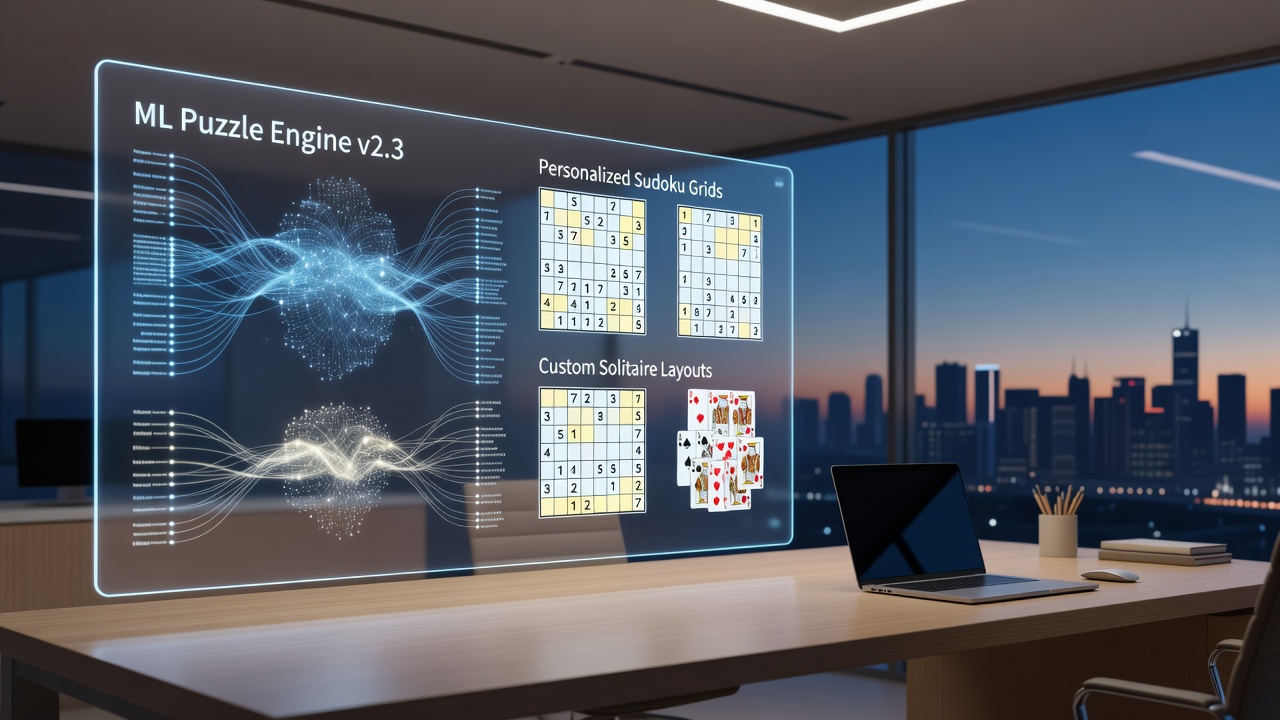 Machine learning systems now drive puzzle creation on digital platforms that blend sudoku grids with solitaire layouts, where algorithms process player interaction logs to produce challenges scaled to demonstrated ability levels. These tools examine completion times, error rates, and move sequences across thousands of sessions, then generate new instances that maintain engagement without overwhelming participants. Observers note that such personalization relies on supervised learning models trained on aggregated gameplay data from global user bases, allowing platforms to refine outputs continuously while preserving the core rules of each game type.
Core Mechanisms Behind Adaptive Puzzle Creation
Reinforcement learning frameworks evaluate sequences of decisions in solitaire setups, where card placements and suit alignments inform subsequent puzzle parameters, while sudoku generators adjust cell constraints based on numerical pattern recognition accuracy. Researchers have documented how clustering techniques group players by performance signatures, enabling the system to draw from libraries of pre-validated puzzle templates that match those clusters. Data from industry reports indicates that platforms using these methods report higher retention metrics compared to static puzzle distributions, though exact figures vary by region and implementation scale.
Feature extraction layers identify subtle indicators such as hesitation patterns during tile matching or backtracking frequency in number placement tasks, then feed those signals into generative adversarial networks that synthesize fresh grids or layouts. This process ensures puzzles evolve alongside user progress, incorporating elements from both game formats to create hybrid experiences that test spatial reasoning alongside logical deduction without repetition of identical configurations.
Integration Patterns in Hybrid Entertainment Systems
Online environments that combine sudoku and solitaire often deploy multi-task learning architectures, where shared neural network components handle cross-game analytics while specialized branches address format-specific rules. One documented case involves platforms that monitor transitions between card suit sequences and numerical cell fillings, applying transfer learning to accelerate personalization for users who switch between modes within a single session. As of July 2026, several browser-based services have expanded these capabilities through edge computing nodes that reduce latency in real-time puzzle regeneration.
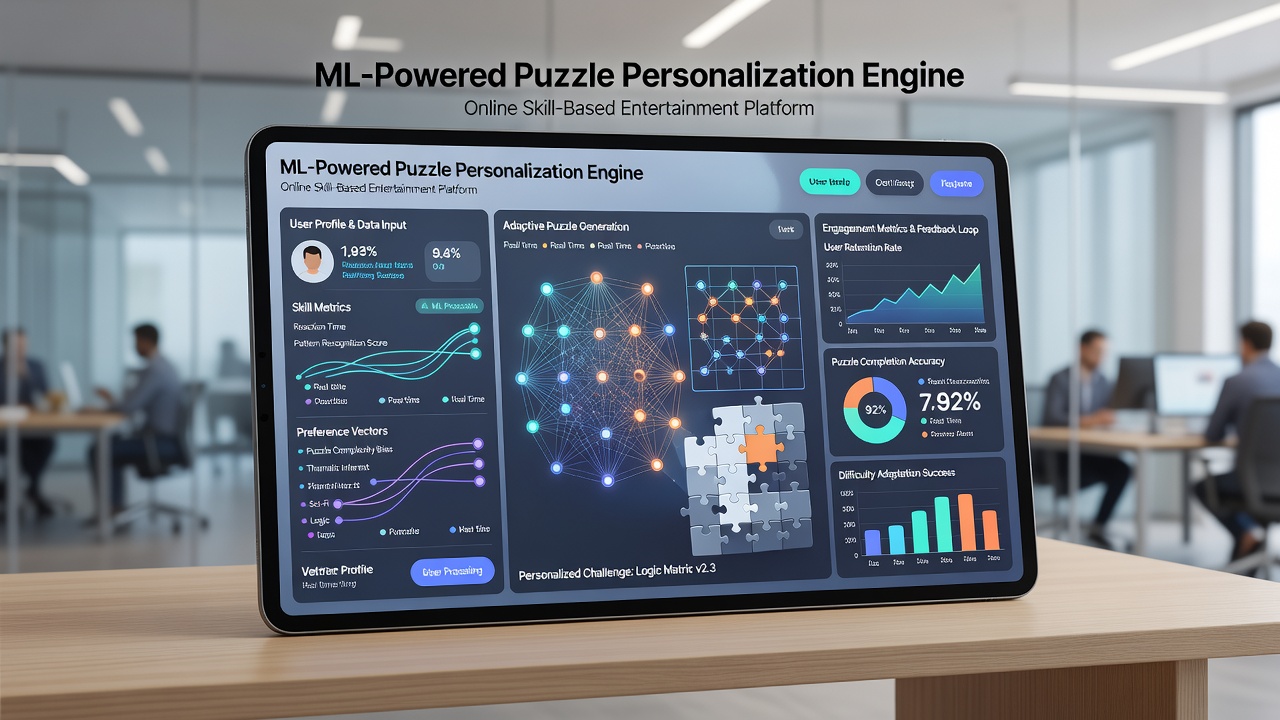
European regulatory bodies tracking digital content consumption have recorded increased participation in skill-focused puzzle categories, with machine learning cited as a contributing factor in user acquisition strategies. Platforms link these systems to cloud-based repositories that store validated puzzle variants, drawing from sources like academic repositories at institutions such as MIT to benchmark generation quality against established cognitive load metrics. The result appears in interfaces that present puzzles calibrated to maintain optimal challenge zones derived from flow theory research.
Technical Implementation and Data Considerations
Training datasets aggregate anonymized metrics from millions of completed games, incorporating variables like grid density in sudoku and tableau complexity in solitaire to calibrate difficulty curves. Natural language processing components sometimes analyze user feedback text to supplement quantitative signals, while anomaly detection flags potential cheating attempts that could skew personalization models. Canadian research initiatives through organizations like the National Research Council have explored similar frameworks for educational game adaptations, providing comparative data on how these techniques transfer across entertainment domains.
Deployment often involves A/B testing pipelines that measure completion rates and voluntary replay counts before full rollout of new generation parameters. Those who've examined production logs describe how ensemble methods combine outputs from multiple models to avoid over-specialization, ensuring that generated puzzles retain unpredictability essential to long-term engagement in both sudoku and solitaire formats.
Future Trajectories Through Mid-2026
Projections for continued development point toward tighter integration with wearable device data for physiological response tracking during puzzle sessions, though current implementations focus primarily on behavioral telemetry. Industry associations such as the International Game Developers Association have published guidelines on ethical data handling for these systems, emphasizing transparency in how player profiles influence puzzle outputs. Observers tracking platform updates note incremental additions of collaborative elements where machine learning facilitates shared puzzle variants among small user groups while retaining individual customization layers.
Conclusion
Machine learning continues to reshape puzzle generation in skill-based online entertainment by leveraging performance analytics to tailor sudoku and solitaire experiences. The documented approaches demonstrate measurable impacts on user interaction patterns through adaptive algorithms that balance challenge and accessibility. Ongoing refinements as platforms scale these technologies will likely draw from broader datasets and cross-disciplinary research to sustain development in this area.