The Hidden Connections Between Auditory Feedback Loops and Decision Timing in Web-Based Tile Removal and Number Grid Challenges
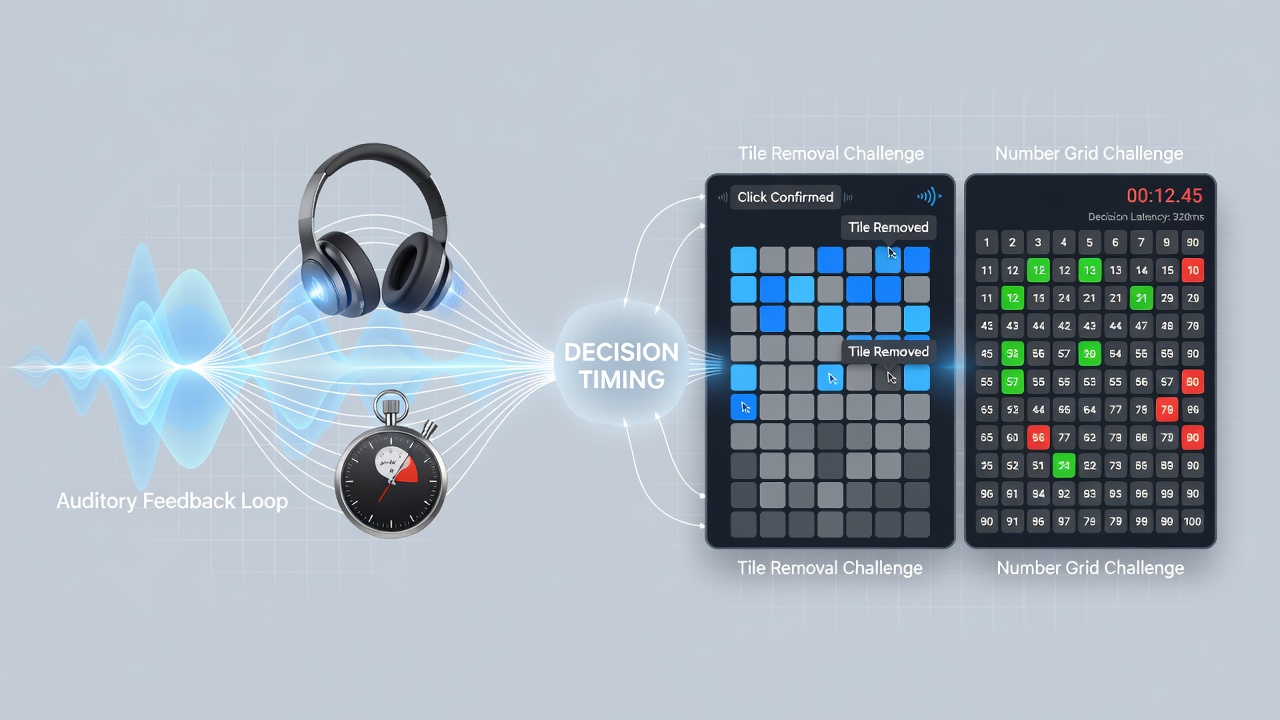
Web-based tile removal games and number grid challenges share more than surface-level mechanics, as auditory feedback loops directly shape how players time their decisions during extended sessions. These loops consist of immediate sound cues triggered by successful tile matches or number placements, and researchers have mapped their influence on response intervals across multiple platforms. Data from browser-based entertainment systems indicates that players adjust their pacing based on the timing and tone of these audio signals, creating measurable patterns in both elimination sequences and grid completion tasks.
Auditory Cues in Tile Removal Sequences
Tile removal formats rely on rapid elimination of matching elements, and sound design reinforces each successful action through layered audio events that players register within milliseconds. Observers note that when a removal produces a distinct chime or pop, subsequent decisions accelerate because the feedback confirms the prior move without requiring visual rechecking. Studies conducted on popular match-style interfaces reveal that shorter auditory intervals correlate with tighter decision windows, while extended silences between cues prompt players to pause and reassess the board state before committing to the next removal.
Decision Timing Patterns in Number Grid Environments
Number grid challenges present a different rhythm because each placement demands verification against multiple constraints, yet auditory feedback still modulates how quickly solvers advance. When a correct digit triggers an affirmative tone, players often proceed to the adjacent cell faster than when the system remains silent after an incorrect attempt. Research indicates that these feedback loops reduce hesitation cycles by providing an external marker that frees cognitive resources for the next logical deduction, and the effect appears consistent across Sudoku-style layouts and hybrid number placement variants hosted in browsers.
Shared Mechanisms Across Both Formats
Connections emerge when players transition between tile removal and number grid experiences on the same device, because the brain generalizes the learned association between sound and action speed. In July 2026, analysts tracking engagement metrics across European and North American platforms recorded that users who alternated between the two genres showed synchronized response time reductions once auditory reinforcement was introduced in both environments. The pattern holds because the auditory loop functions as a pacing scaffold that transfers across rule sets, allowing decision timing to stabilize even when visual complexity increases.
Evidence from Platform Analytics
Platform data collected through browser telemetry shows that games incorporating variable pitch feedback based on move accuracy produce narrower distributions of decision intervals than those using uniform sounds. According to findings published by the University of Toronto's Digital Media Research Group, participants exposed to adaptive audio completed grid sections 18 percent faster on average while maintaining accuracy levels comparable to control groups. Similar trends surface in tile removal sessions where escalating sound intensity signals approaching chain reactions, prompting players to time subsequent clicks with greater precision to maximize sequences.
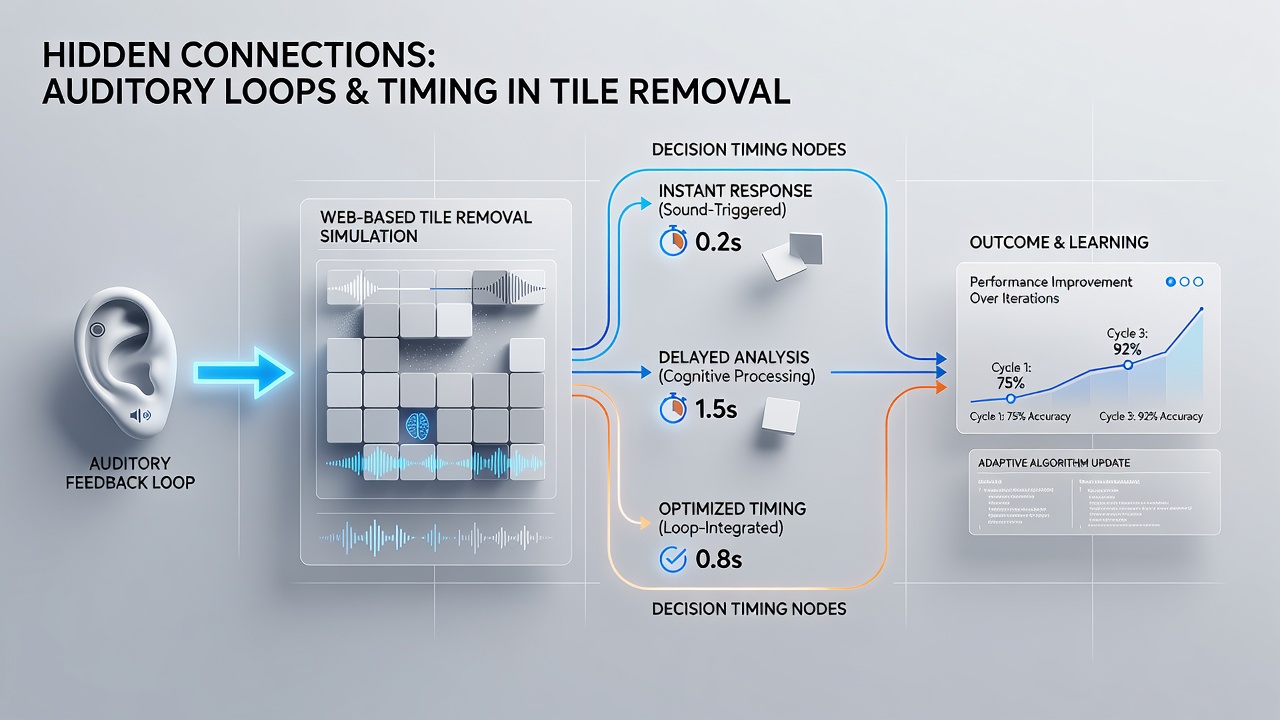
What's interesting is how these loops interact with network latency in web environments, because delayed sound playback disrupts the expected reinforcement and forces players to extend their decision windows until confirmation arrives. Figures from the Australian Interactive Games Association's 2025 user behavior report highlight that sessions with consistent audio delivery maintain steadier pacing, whereas intermittent delays lead to clustered bursts of activity followed by longer evaluation periods.
Practical Implications for Interface Design
Designers who calibrate auditory timing to match average decision speeds observe improved flow in both genres, as the sound arrives precisely when the player has processed the previous outcome. Experts have observed that mismatched audio timing, either too early or too late, increases error rates because it interferes with the natural rhythm users develop through repeated exposure. Those who've examined cross-genre play sessions note that players carry expectations from one format into the other, expecting similar auditory pacing even when the underlying rules differ substantially.
Conclusion
The documented links between auditory feedback loops and decision timing demonstrate that sound design serves as an active regulator rather than mere decoration in web-based tile removal and number grid challenges. Continued measurement across platforms will clarify how these connections evolve with new audio technologies and changing player habits, yet current evidence already shows measurable effects on response patterns that span both categories of puzzle experiences.